
James Avery
Amazon.in20 Jun 2016
Verified purchaseFormat: Paperback
Five Stars
Great read Read more Read less

We may earn a commission when you buy through these links. It never changes the price or the order.
Today's price against the prices it has sold for.
From 124 days of our own price history, across stores.
₹4,390
Out of stock at our last check
Ratings on stores (29)Reviews on Whydud (5)
No customer photos yet. Add yours with a review
Customer rating
4.3out of 5
29 ratings across stores
| 5★ | 66% | |
|---|---|---|
| 4★ | 14% | |
| 3★ | 14% | |
| 2★ | 0% | |
| 1★ | 7% |
80% verified purchases
James Avery
Amazon.in20 Jun 2016
Great read Read more Read less
Tamara
Amazon.in28 Mar 2019
Used it for a paper that i'm working on! Had a lot of helpful information on how to build a story for games specifically and a lot of good examples and case studies that clarify certain points! Read more Read less
Jessica Weissman
Amazon.in30 May 2011
People love stories, and have loved them for as long as we have records - Homer told stories, the Bible is full of them, and other cultures have them too. As the technical resources available for videogames evolve, there are more resources to devote to new forms of storytelling. Players can now participate in stories in new ways rather than just being funneled down one narrative track after they solve a series of interesting story-based puzzles. This book analyzes and presents the types of storytelling exemplified in modern videogames in an ordered list of categories that reflects how much control is given to the players, with plenty of examples. The issues taken up by the two authors as they comment on each others' words range from how much player-centric storytelling dilutes the authorial hand to some of the practicalities of creating lots of scenes and interactions that few players will see. It seems that not many people go back and play a game again in order to see the other pathways. Maybe that correlates to some factor in these modern games, as I remember playing some of the original Infocom text adventures repeatedly to see what fun stuff I missed and to explore the worlds they set up. It's taken for granted these days tbat totally player-driven narrative is best, and that's what seems to interest the best and most creative developers. To their credit, the authors spend almost as much time talking about the disadvantages of this form as they do about the advantages. They also present research comparing what players say they want to what they actually buy and play through. Everyone is familiar with totally player-driven stories - that describes both cowboys-and-indians-in-the-back-yard and Dungeons and Dragons perfectly. Which points up the chief technical limitation of completely player-driven games: they require at least one human directing things so that the game can respond to any possible situation. No finite computer game, and certainly no game created for profit can match this state. Even the Sims, which the authors right call a toy rather than a game, meets this criterion. World of Warcraft may come closer than anything else, but even there the developers tell players that the best way to enjoy it is to go through a few quests as planned out, and THEN start exploring. What people seem to like best is other people, whether it is social media or backyard games or WoW. Player-driven stories usually come closer than others to providing people. What people like second-best is a good story, and that takes some degree of authorial control. Totally player-driven games haven't yet matched the emotional impact of certain games the authors describe in this book. So should you buy this book? Yes, if you're interested in a thorough non-academic consideration of story in games, with a lot of examples. There are insights here. But if you haven't read some of the classics of the field, such as Chris Crawford's The Art of Computer Game Design, start there. Nobody has proven Crawford wrong yet, though they have added a lot of practical knowledge. Read more Read less
1wngdngl
Amazon.in19 Jul 2019
Many in-depth breakdowns of both good and bad storytelling examples, and a fair view of the potential of many types of interactivity. Read more Read less
Martin Jackson
Amazon.in13 Sept 2011
I bought this book to give me ideas on ways of developing my interactive stories and out of the whole book, there was one good idea, to draw flowcharts for the branches from decision points, to help plan the interactive side of the story. I found the book useful. I also was fascinated on how other people write interactive stories, so the book was informative. I haven't read it all, from cover to cover, but I will. Read more Read less
 Square Enix Final Fantasy XII The Zodiac Age 2 for Nintendo Switch₹3,199
 Stray for Nintendo Switch₹3,617
 Ps5 Metaphor Refantazio Launch Edition₹3,390
 Sony Ghost of Tsushima | Director's Cut | PS5 Game₹3,790
 Horizon Forbidden West Complete Edition for Playstation 5₹3,498
 It Takes Two - Nintendo Switch₹2,990
 Mortal Kombat 11 - Ultimate Edition Includes Kombat Pack 1 2 Aftermath Expansion PS4₹3,490
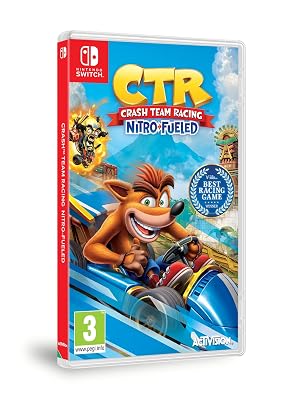 Crash Team Racing - Nitro Fueled₹3,790


SQUARE ENIX
₹3,199


