


Flipkart Customer
Flipkart29 Sept 2020
Verified purchase
Must buy!
Good book they have explained each tablet with summary and they also have a summary of the full story and they have more than 122 pages

We may earn a commission when you buy through these links. It never changes the price or the order.
Today's price against the prices it has sold for.
From 256 days of our own price history, across stores.
₹306
Out of stock at our last check
The nearest alternatives in this category and price range.
 Harry Potter and the Prisoner of Azkaban₹379Rated 4.8★ vs 4.5★
 Grumpy Monkey₹302₹47 cheaper
 Where Do Diggers Sleep at Night₹388Rated 4.8★ vs 4.5★
Ratings on stores (6)Reviews on Whydud (8)
Customer rating
4.5out of 5
6 ratings across stores
| 5★ | 100% | |
|---|---|---|
| 4★ | 0% | |
| 3★ | 0% | |
| 2★ | 0% | |
| 1★ | 0% |
100% verified purchases
Flipkart Customer
Flipkart29 Sept 2020
Good book they have explained each tablet with summary and they also have a summary of the full story and they have more than 122 pages
Gyan Jyoti Sonowal
Amazon.in20 Feb 2025
This version translated by NK Sandars is okay but I would prefer the Andrew George translation because that book has lots of attractive illustrations as well which this book lacks. Read more Read less
Glyn de Lacy
Amazon.in22 Jan 2026
Great read for anyone wanting to study this amazing account that includes the biblical flood story from an alternative and more ancient source. Read more Read less
Amazon Customer
Amazon.in24 Apr 2019
Good Read more Read less
Andy Mulholland
Amazon.in22 Jan 2025
Well presented book. The introduction by the author provides a comprehensive background on the story, history, myth and players. I feel I know the back story before I even started the poem. Read more Read less
Guillermo Maynez
Amazon.in14 Jul 2006
This poem is perhaps the oldest "book" known so far. It is supposed to have been first conceived by the end of the Third Millenium B.C. It tells, in a direct and somewhat naive way, the adventures of Gilgamesh, king of Uruk, in Mesopotamia. In the beginning we are told of how Gilgamesh got to be king, and how he felt lonely, since he lacked a friend worthy of him. The gods listen to him, and tell him to send a whore to seduce Enkidu, a savage man who lives with the beasts and behaves as such. He is the "good savage", totally in a natural state and without a civilizatory stain. It is chilling to think of this particular story as an ancient memory of our life in pre-civilization times. The prostitute manages to seduce him (any resemblance to Adam and Eve is granted), and then the beasts reject him. He has become fully human. This passage is a wonderful metaphore of the civilizatory process which we humans experienced in immemorial ages. Enkidu has to learn to drink milk from a jar and not directly from the breasts of animals. He has to learn to wear clothes, drink wine and sleep on a bed. Enkidu fights Gilgamesh, showing him his strength and courage, which makes him the inseparable friend. After that, Gilgamesh feels the urgency to leave his legacy in this world before his inevitable death, another humanizing feature, since the individual already shows a full conscience of his mortality and of himself, and thinks of the future. So, both friends depart for the Woods, presumably current Lebanon (the Cedar Forest), where Ancient Mesopotamians got their timber, so scarce in their country. To conquer the Woods, they must kill the giant Humbaba, guardian of the forest, incarnation of Evil and presumably the first reference to the Devil in literature. In doing so they infuriate all the gods except one, and one of them must die. This is how Enkidu gets sick and dies after an excruciating agony. This fact turns out to be devastating for Gilgamesh, because it confirms the inevitability of his own demise. Ravaged by his friend's death, Gilgamesh sets out on a journey to try and find a way to escape from mortality. He travels to the East, beyond the mountains, to the Country of Sun, to try to cross the Sea and reach the land of Dilmun (kind of a preserved Garden of Eden), where Utnapishtim lives, the only human to have survived the Flood (it raises your hair to see a reference to this cataclism, centuries before the Bible), and consequently granted immortality by the gods. Gilgamesh reaches the "garden by the sea" where a young female vineyard tender lives. She tells him frankly that he will never find what he's looking for, since Death is unavoidable. It is humans' Fate, but to humans it has also been granted the possibility of happiness, and so the girl advises him to "fill your belly with good things... have fun and rejoice. Wear clean clothes, bathe in fresh water, caress yout little cildren and embrace and make your woman happy", for that is also the Fate of Man. Gilgamesh can't give up and convinces the oarsman to take him to Dilmun. Utnapishtim, puzzled, receives him and tells him he'll live forever if he stays awake six days and seven nights. Of course he can't make it, and when he wakes up Utnapishtim tells him the story of the Flood, suprisingly and suspiciously similar to that told later in the hebrew Genesis (let's not forget the long years of Hebrew exile in Babilonia). Gilgamesh makes a final effort, ripping from the bottom of the sea the "plant that gives you your youth back" but later, while bathing in a well, a snake steals the plant, changes skin and leaves. Unconsoled, Gilgamesh returns to Uruk and dies. It is difficult to exaggerate the historical and literary importance of this work, since in its brief span it collects all that makes us human: civilization, glory, the conscience of Death. It also gathers primeval memories, the process of going out of the African plains and building cities, the search for supplies and the fear of the beasts of the forests. The tale of the Flood confirms for us the memory of cosmic catastrophes which since the remote past left an indelible mark upon us. Indispensable reading. Read more Read less
Kindle Customer
Amazon.in15 May 2024
I liked gilgamesh dying, enkidnu dying, the flood. I disliked them killing the bull of heaven I also disliked them chopping down the cedar trees Read more Read less
Yen Il S
Amazon.in30 Dec 2012
For those interested on mythology in the middle east . Very easy to read , sometime sound like a children book. Read more Read less
 Harry Potter and the Prisoner of Azkaban₹379
 Grumpy Monkey₹302
 Where Do Diggers Sleep at Night₹388
 Way of the Warrior Kid Movie Tie-In Edition₹292
 The Elephant Whisperer₹377
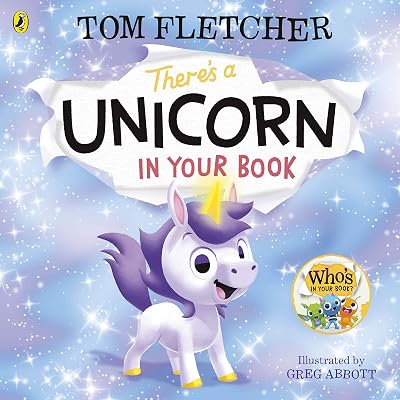 There's a Unicorn in Your Book: Number 1 picture-book bestseller₹324
 Hello,World Backyard Bugs₹339
 Thirteen Months In The Himalayas Book₹287

